

























































































TECHNICAL SEO AUDIT
Booking widgets in iframes, expired departures, copied supplier text.


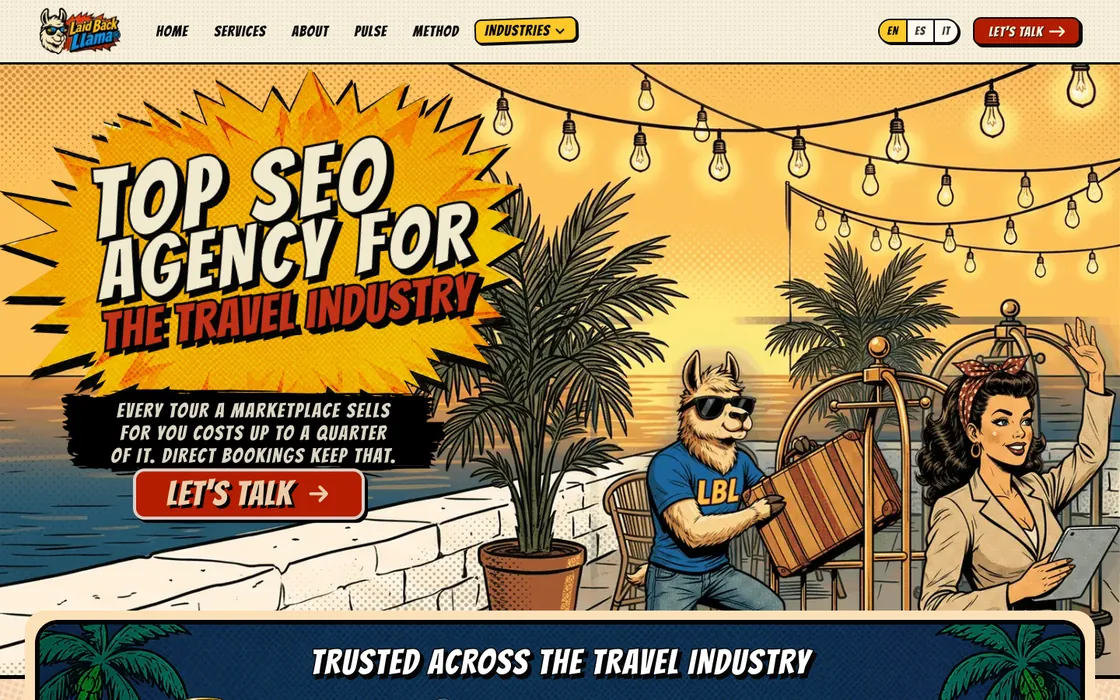
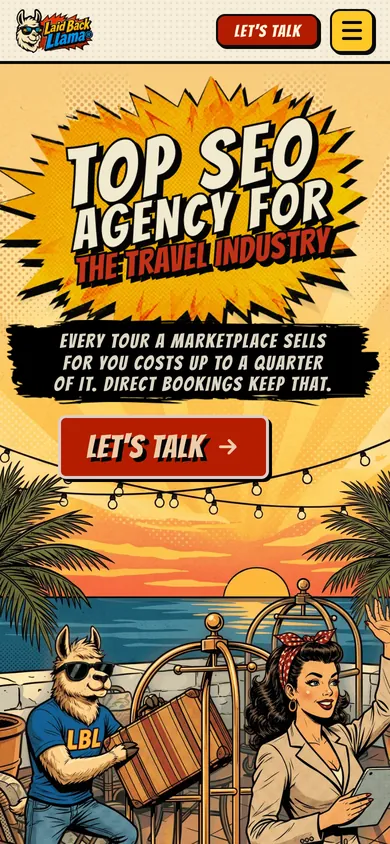
EVERY TOUR A MARKETPLACE SELLSFOR YOU COSTS UP TO A QUARTEROF IT. DIRECT BOOKINGS KEEP THAT.
Reported in direct bookings, not impressions.
Marketplace commission, agent margin and what a direct booking is worth.
Ranked before the season opens, not halfway through it.
Plain monthly numbers. No dashboard homework.
Booking widgets in iframes, expired departures, copied supplier text.
One page per tour: days, price, next departures. Your words, not the supplier’s.
Win back the traveller the marketplace is renting you.
Earn the traveller months before they are ready to pay.
Published and ranking by the time people start researching.
Your office or meeting point, on the map before your site even loads.
Google and Tripadvisor reviews, answered fast and working for your rankings.
One page per market with hreflang set, so no two compete.
Links from travel press, guides and tourism boards.
Photo-heavy tour pages that load on a phone in a hotel lobby.
Guards your rankings against penalties, scrapers and negative SEO.
Direct bookings fell off a cliff. We find out why today, not next season.
MORE
DIRECT BOOKINGS
LESS PAID
IN COMMISSION
DEPARTURES
THAT FILL UP
Our proposals list all of the following. The engines that we adapt based on your budget and the work that we do with every plan no matter of the budget.
High volume link building inside our own network. It powers a domain up fast and builds relevance for the exact terms you want.
Manual outreach to real sites (with clean profiles and no link farms) with real traffic in your niche.
Stories placed in industry press and mainstream media. At least 7 links from every campaign.
Secondary links behind each placement, so every link passes more authority to you.
We buy established sites in your niche. Which gives an advantage your competitors cannot copy.
Banners on sites your buyers already read, so traffic arrives while organic catches up.
Our own acceleration system. Usually boosts your authority quickly.
Every new client starts on our lowest base fee. It only goes up as the results we deliver grow.
Our in-house designers and developers build websites for travel agencies, from the first sketch to launch day: a design made for your brand, fast clean code, and pages planned around what your customers search. It looks right, it loads fast, and it is ready to rank the day it goes live.
Technical SEO, itinerary pages and destination content, aimed at the traveller still choosing where to go and the one comparing your tour against three others.
Your main competitor is not the agency down the road. It is Viator, GetYourGuide and the big OTAs, and you will not outrank them for tours in Lisbon. What you can win is the specific search: a seven-day walking tour of the Dolomites, a small-group trip to Oaxaca in November, your own name. Those searches come from people who already know what they want, and they book direct.
Run the arithmetic on your own numbers. A marketplace usually keeps between twenty and thirty percent of a tour, and an OTA package leaves less margin than that. If organic brings even a modest share of your bookings direct, it pays for the work several times over, and the traveller’s email is yours for the next trip rather than the marketplace’s.
No, and anyone telling you otherwise has not sold a tour. The marketplaces are how most people find you the first time. The point is not to leave them. It is that when someone finds your tour there and then searches your name, they land on your site and book with you, not on a reseller’s page with your photos on it.
Yes. The same supplier text sits on fifty other agency sites, and Google shows one of them. It is rarely yours. Rewriting every itinerary is not realistic, so we start with the ten that sell most and give each one a day-by-day, a clear price and something only you can say about it.
Nothing, if it is built right. The itinerary keeps one permanent address and the dates update underneath it. Most sites do the opposite: a new page for every departure, deleted when it sells out or the date goes by, and every ranking it earned goes with it. When a tour is retired for good, its page is redirected to the closest one you still sell.
Access to your site, analytics and Search Console, which booking system you use and how it is embedded (FareHarbor, Rezdy, Bokun or your own), and your real bookings split by channel. That last one matters most. Without it we cannot show you what a direct booking is actually worth to you.
SEO field notes, growth breakdowns, web strategy, and operator-first ideas from Laid Back Llama®. No fluff. No spam. Just useful moves.
GET THE NOTES
Actionable ideas to improve visibility, trust, and growth.