
























































































TECHNICAL SEO AUDIT
Crawl traps, heavy galleries and checkouts that fail in silence.


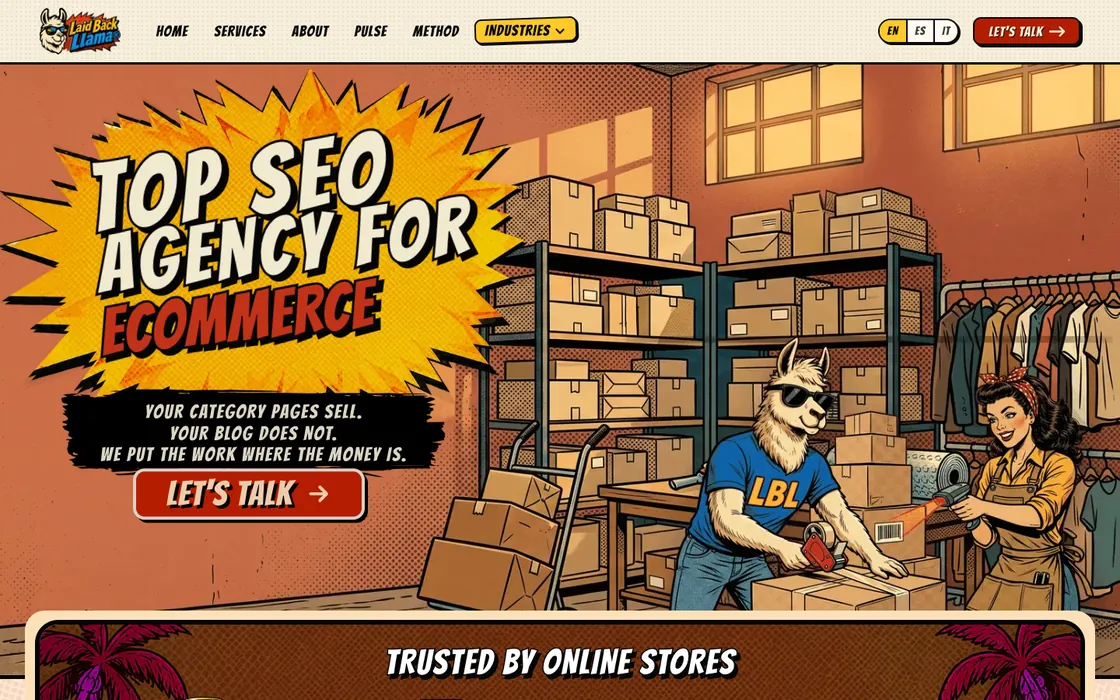
YOUR CATEGORY PAGES SELL.YOUR BLOG DOES NOT.WE PUT THE WORK WHERE THE MONEY IS.
Reported in revenue from organic, not sessions.
Facets, feeds, variants and what each one costs you in crawl.
Fixes that hold across ten thousand SKUs, not ten.
Plain monthly numbers. No dashboard homework.
Crawl traps, heavy galleries and checkouts that fail in silence.
Filters spawning a million URLs and eating your crawl budget.
The pages that carry the money terms, built to actually win them.
Titles, variants and copy that beat the marketplace listing.
Price, stock and ratings showing in the result itself.
What happens to a URL when the product goes, so the links survive.
Win back the searches resellers currently answer for you.
Ranked before the season opens, not halfway through it.
Push authority into the categories that actually earn.
Faster product pages on the phones people buy from.
Guards your rankings against penalties, scrapers and negative SEO.
Organic revenue fell off a cliff. We find out why today, not next month.
MORE
REVENUE
CATEGORIES
THAT RANK
TRAFFIC THAT
CONVERTS
Our proposals list all of the following. The engines that we adapt based on your budget and the work that we do with every plan no matter of the budget.
High volume link building inside our own network. It powers a domain up fast and builds relevance for the exact terms you want.
Manual outreach to real sites (with clean profiles and no link farms) with real traffic in your niche.
Stories placed in industry press and mainstream media. At least 7 links from every campaign.
Secondary links behind each placement, so every link passes more authority to you.
We buy established sites in your niche. Which gives an advantage your competitors cannot copy.
Banners on sites your buyers already read, so traffic arrives while organic catches up.
Our own acceleration system. Usually boosts your authority quickly.
Every new client starts on our lowest base fee. It only goes up as the results we deliver grow.
Our in-house designers and developers build websites for online stores, from the first sketch to launch day: a design made for your brand, fast clean code, and pages planned around what your customers search. It looks right, it loads fast, and it is ready to rank the day it goes live.

Technical SEO, category-led architecture and product pages built to beat the marketplace, aimed at the searches made with a card already out.
The pages that make money are not the ones most stores work on. Category and collection pages carry the commercial searches, product pages carry the long tail, and the blog carries almost none of it. Add filters generating URLs faster than Google can crawl them and most of this job turns out to be architecture rather than content.
It is the most expensive technical problem in retail. Every colour and size combination can become its own crawlable URL, and Google spends its budget there instead of on your real categories. We keep the facets people genuinely search, because those deserve to rank, and cut the rest off properly.
Sometimes, and where it cannot, the honest answer is to stop fighting on that term. You will rarely beat a marketplace on a bare product name. You beat it on what it handles badly: comparisons, sizing and fit, use cases, bundles, and everything around the product rather than the product itself.
Not delete them all, which is the usual reflex and throws away every link the page ever earned. Depending on whether it is coming back, the page either stays up with alternatives on it, or redirects to the closest match, or to its parent category. Doing that once across a few thousand SKUs is often worth more than a quarter of blog posts.
Technical fixes can move within weeks, because you are unblocking pages Google already wanted. Competitive category terms take three to six months. We report revenue and assisted revenue from organic rather than sessions, so you can see which of the two is happening.
Access to the site, analytics and Search Console, your product feed, and whoever owns the platform. If you are on hosted software that limits what you can change, say so early, because it decides what is worth doing at all.
SEO field notes, growth breakdowns, web strategy, and operator-first ideas from Laid Back Llama®. No fluff. No spam. Just useful moves.
GET THE NOTES
Actionable ideas to improve visibility, trust, and growth.